Best Hair Loss Treatment for Men: Reviews and Options Compared

Male pattern baldness is not a mystery condition. It has a known mechanism, two medications with decades of trial data, and a price range that runs from about $3 a month to $15,000 in one go. What makes it confusing is the marketing layer sitting on top: telehealth brands selling the same generic ingredients at very different prices, laser caps with four-figure price tags, and supplements promising what only prescriptions can deliver.
This guide compares the best hair loss treatment for men option by option, with the evidence, the realistic success rates, the side effect profile and what each one costs per month. The short version: the most effective approach is also one of the cheapest, and most men overpay for it.
Key Takeaways
- Finasteride plus topical minoxidil is the gold standard: combined, as many as 90% of men with male pattern baldness see at least moderate regrowth, and the pair costs roughly $28 a month.
- Topical minoxidil alone is remarkably cheap: generic 5% minoxidil runs about $3 a month from a basics brand, versus $8 to $15 from a telehealth subscription for the same active.
- Finasteride prevents more than it regrows: around 80% of men stop further crown loss and about two-thirds see some regrowth, which is why starting early matters so much.
- Side effects are real but uncommon: sexual side effects affect roughly 1% to 2% of finasteride users, and topical versions reduce systemic absorption further.
- Dutasteride is stronger and riskier: the most effective oral in head-to-head research, with sexual side effects in about 5% of users against finasteride’s 2% to 3%.
- Everything stops working when you stop: except transplant surgery, every option here maintains hair only while you continue it.
How Male Pattern Hair Loss Actually Works
Androgenetic alopecia is driven by dihydrotestosterone, or DHT, a potent derivative of testosterone produced by the enzyme 5-alpha reductase. In men who are genetically sensitive to it, DHT gradually miniaturises follicles at the temples and crown. Each growth cycle produces a slightly thinner, shorter hair until the follicle stops producing visible hair at all.
That mechanism explains why the treatments split cleanly into two families. Drugs like finasteride and dutasteride reduce DHT, attacking the cause. Minoxidil does not touch DHT at all; it widens blood vessels and extends the growth phase, improving the output of follicles that are still alive. Used together they work on two fronts, which is exactly why the combination outperforms either alone.
The single most important point in this article: a miniaturised follicle can be revived, but a follicle that has been dormant for years usually cannot. Every month you wait, the ceiling on what any treatment can achieve drops a little. Starting at the first sign of recession gives you far more to work with than starting after five years of it.
Best Hair Loss Treatments for Men: Quick Comparison
| Treatment | Typical Monthly Cost | Evidence of Effect | Main Drawback |
|---|---|---|---|
| Topical minoxidil 5% | $3 to $15 | Stops loss in about 66% of men; moderate regrowth in about 52% | Twice-daily application; crown more than hairline |
| Oral finasteride 1mg | $16 to $26 | About 80% prevent crown loss; roughly two-thirds regrow | Prescription; sexual side effects in 1% to 2% |
| Finasteride + topical minoxidil | About $28 bundled | Up to 90% see at least moderate regrowth | Two daily habits to maintain |
| Topical finasteride + minoxidil | $35 to $60 | Comparable efficacy to oral finasteride | Compounded, so costs more |
| Oral minoxidil | $22 to $39 | Works across the whole scalp | Unwanted body hair; needs monitoring |
| Oral dutasteride 0.5mg | About $59 | Most effective oral in head-to-head research | Sexual side effects in about 5% |
| Low-level laser therapy | $999 to $2,124 upfront | Significant density gains in 9 of 11 studies | High upfront cost; slow results |
| Hair transplant surgery | $3,000 to $15,000 once | Permanent, surgeon-dependent | Cost, recovery, not insured |
The Treatments, Reviewed
1. Topical Minoxidil: Best Value Starting Point
Minoxidil is available over the counter as a 5% solution or foam, applied to the scalp. The published figures are consistent and worth quoting precisely: for about 66% of men, minoxidil stops hair loss, and 52% of men experience moderate regrowth. It performs best on crown thinning and least well on a receding hairline.
Where the money goes: this is the clearest case of brand premium in the category. Generic 5% minoxidil from an Amazon basics line costs around $3 a month. Costco’s Kirkland version is similarly cheap. Telehealth brands charge $8 to $15 a month for the identical active ingredient, with the difference being packaging and subscription convenience.
Side effects: scalp irritation is the common one, and it is often caused by the propylene glycol in the liquid solution rather than the minoxidil itself. Switching to the foam resolves it for most men. Expect a shedding phase in the first weeks.
Verdict: start here. There is no good reason to pay a subscription premium for a generic topical unless the reminder emails are what keeps you consistent.
2. Oral Finasteride: Best for Stopping Further Loss
Finasteride at 1mg daily inhibits 5-alpha reductase and lowers scalp DHT. It requires a prescription, which telehealth services issue after an online consultation. The efficacy numbers are strong: about 80% of men prevent further crown loss, roughly 70% prevent hairline recession, and two-thirds experience some regrowth.
Price spread: Strut Health sits around $16 to $17 a month, Keeps about $19.50, Roman about $20, and Hims about $26. The medication is the same 1mg generic finasteride in each case, so the difference is service model and consultation experience.
Side effects, honestly stated: erectile dysfunction and reduced libido occur in roughly 1% to 2% of users. Lower sperm count and, rarely, depressed mood have been reported. Most side effects resolve when the drug is stopped, though a small number of men report persistent symptoms, which is a documented and genuinely debated topic worth raising with a prescriber. Finasteride also lowers PSA readings, so any doctor ordering a prostate test needs to know you take it.
Verdict: the most important treatment for anyone whose hairline is actively receding, because preventing loss is far easier than reversing it.
3. Finasteride Plus Topical Minoxidil: The Gold Standard
This is the combination most dermatologists reach for, and the headline statistic is the best in the category: as many as 90% of men with male pattern baldness experience at least moderate hair regrowth. Keeps bundles the pair at roughly $28 a month, which is extraordinary value for the best-evidenced protocol available.
Why it works better: finasteride removes the hormonal pressure shrinking your follicles while minoxidil improves blood supply and extends the growth phase of the ones still active. Neither covers the other’s mechanism, so the gain is additive rather than redundant.
Who it suits: essentially any man with pattern loss who has no contraindication to finasteride and can keep two daily habits. If you only take one recommendation from this article, take this one.
4. Topical Finasteride and Minoxidil: Best for Side Effect Concerns
Compounded formulations combine roughly 0.25% to 0.3% finasteride with 5% to 6% minoxidil in a single topical. Hims charges about $35 to $50 a month and Keeps about $40 to $60, with Happy Head also offering a version.
The appeal: research indicates comparable efficacy to oral finasteride with minimal sexual side effects, because far less of the drug reaches the bloodstream. For men who want finasteride’s benefit but are genuinely worried about systemic effects, this is a real middle path rather than a marketing angle.
The trade-offs: it costs roughly double the oral version, compounded products are less standardised than approved generics, and absorption still happens, just less of it. It is also one more thing to apply daily.
5. Oral Minoxidil: Best for Whole-Scalp Thinning
Low-dose oral minoxidil has become a mainstream off-label option, prescribed at 1.25mg by Happy Head at about $22 a month, 2.5mg by Roman at about $30, and 3mg by Hims at about $39. Because it works systemically, it treats the entire scalp evenly rather than only where you managed to rub the liquid.
Results timeline: expect four to six months before changes are clear, similar to the topical.
Side effects that matter: hypertrichosis, meaning unwanted facial and body hair, is the most common and the most likely to make men stop. Pedal edema, or ankle swelling, also occurs, and rare cardiovascular effects mean this needs a prescriber who will monitor you. It is not a casual upgrade from the topical.
Who it suits: men with diffuse thinning across the whole scalp, or those who could never stick to twice-daily topical application.
6. Dutasteride: Strongest Oral, Highest Side Effect Rate
Dutasteride at 0.5mg blocks both type 1 and type 2 5-alpha reductase, where finasteride blocks only type 2, so it suppresses DHT more completely. It is described as the most effective oral medication in head-to-head research. Happy Head prices it around $59 a month.
The cost of that potency: sexual side effects appear in roughly 5% of users against 2% to 3% for finasteride. Dutasteride also has a much longer half-life, meaning it clears from your system far more slowly if you want to stop.
Topical dutasteride is available compounded with minoxidil at around $69 from Strut Health and $89 from Happy Head, aiming to keep the DHT suppression while limiting systemic exposure.
Who it suits: men who have taken finasteride properly for a year and are still losing ground. It is a second-line option, not a starting point.
7. Low-Level Laser Therapy: Best Drug-Free Device
Laser caps use arrays of 655nm diodes, typically 272 to 304 of them, worn for short sessions several times a week. Kiierr’s 272 Premier runs about $999 and the Capillus PRO about $2,124. Hairmax and LaserCap compete in the same bracket.
The evidence is better than most people assume: across published research, improvements in hair density and thickness reached statistical significance in nine of eleven studies, with one finding roughly 26 additional hairs per square centimetre after six months. Side effects are mild and short-lived: minor skin discomfort, headache, redness or itching that resolves within days or weeks.
The catch: it is a large upfront payment for gains that are real but modest compared with finasteride, and it demands consistent use for months before anything shows. Its best use is as an addition to medication for men who want every available lever, or as the main option for someone who cannot take DHT blockers.
8. Hair Transplant Surgery: Best Permanent Solution
Surgical restoration moves follicles from the back and sides, which are genetically resistant to DHT, into thinning areas. The two techniques are FUT, which harvests a strip, and FUE, which extracts individual units. Costs run from $3,000 to $15,000 depending on graft count and surgeon, and it is cosmetic surgery, so insurance does not cover it.
The thing clinics underplay: transplanted hair is permanent, but your untransplanted hair keeps thinning on its original schedule. Men who have surgery without staying on finasteride often need a second procedure a few years later as the surrounding hair recedes around the graft. Surgery and medication are partners, not alternatives.
Non-surgical alternative: hair replacement systems such as HairClub’s Xtrands bond hair to existing strands for immediate coverage on a subscription basis, available at roughly 100 US locations. Results are instant and work for any type of loss, but require ongoing maintenance visits.
What About Shampoos and Supplements?
Ketoconazole shampoo, sold as Nizoral, has modest evidence for reducing scalp inflammation and some anti-androgen activity, and it is a reasonable cheap addition two or three times a week. Saw palmetto blocks DHT in principle but at a fraction of finasteride’s effect, and the human data is weak. Biotin only helps if you are deficient, which is rare, and high doses interfere with thyroid and cardiac blood tests.
No shampoo or supplement has ever produced results comparable to finasteride or minoxidil in a controlled trial. They are supporting players. If your budget is limited, spend it on the actives first. The same logic applies to grooming spend generally, which we cover in our comparison of affordable skin care products by price and buyer reviews.
Building a Treatment Plan That Fits Your Situation
- Early recession, no other issues: oral finasteride plus 5% topical minoxidil. Best evidence, roughly $28 a month bundled.
- Worried about sexual side effects: compounded topical finasteride with minoxidil, at $35 to $60 a month.
- On the tightest budget: generic 5% minoxidil foam at about $3 a month, plus ketoconazole shampoo twice weekly.
- Diffuse thinning across the whole scalp: discuss low-dose oral minoxidil with a prescriber who will monitor you.
- A year on finasteride and still losing: ask about dutasteride, and consider adding laser therapy.
- Advanced loss with bare areas: consult a transplant surgeon, and plan to stay on medication afterwards.
Frequently Asked Questions
How long until I see results?
Expect four to six months for a fair assessment with any medication, and twelve months to see the full effect. Both minoxidil and finasteride can cause temporary shedding early on as follicles move into a new growth phase. That is a sign of activity, not failure.
Will I have to take this forever?
Yes, with the single exception of transplanted follicles. Finasteride and minoxidil suppress an ongoing process rather than curing it, so stopping means returning to your genetic trajectory over the following three to twelve months, usually including the hair you gained.
Is finasteride safe long term?
It has been prescribed for decades with a well-characterised profile, and sexual side effects affect a small minority. The honest answer is that the risk is low but not zero, that a small number of men report persistent symptoms, and that this is a conversation to have with a prescriber who knows your history rather than a question to settle from a review article.
Are telehealth brands like Hims and Keeps worth the price?
They are worth it for the prescription access and the convenience of consultation, delivery and refills in one place. They are not worth it if you are paying a premium for over-the-counter minoxidil you could buy generically for a few dollars. A practical approach is to use a service for the prescription items and buy your topical minoxidil generically.
Does women’s hair loss respond to the same treatments?
Minoxidil works for both, but finasteride and dutasteride are generally not prescribed to women of childbearing age because of serious risks in pregnancy. The causes also differ more widely in women. Our separate guide to the best hair growth products for women covers the options that are appropriate.
The Verdict
The best hair loss treatment for men is oral finasteride combined with 5% topical minoxidil. It has the strongest evidence of anything available, with up to 90% of men seeing at least moderate regrowth, and bundled at roughly $28 a month it is also one of the cheapest routes. Everything else in this guide is a variation on that foundation: a topical version if side effects worry you, dutasteride if finasteride is not holding the line, a laser cap or surgery if you want to add to it.
The more valuable takeaway is about timing. These medications are far better at keeping hair than at bringing it back. A man who starts at the first temple recession and stays consistent will almost always end up with a better head of hair than one who spends two years on shampoos and supplements before getting serious.
This article is for general information and is not medical advice. Finasteride, dutasteride and oral minoxidil are prescription medications with real risks and require assessment by a qualified prescriber. Discuss any treatment with your doctor, especially if you take other medication or have existing health conditions.
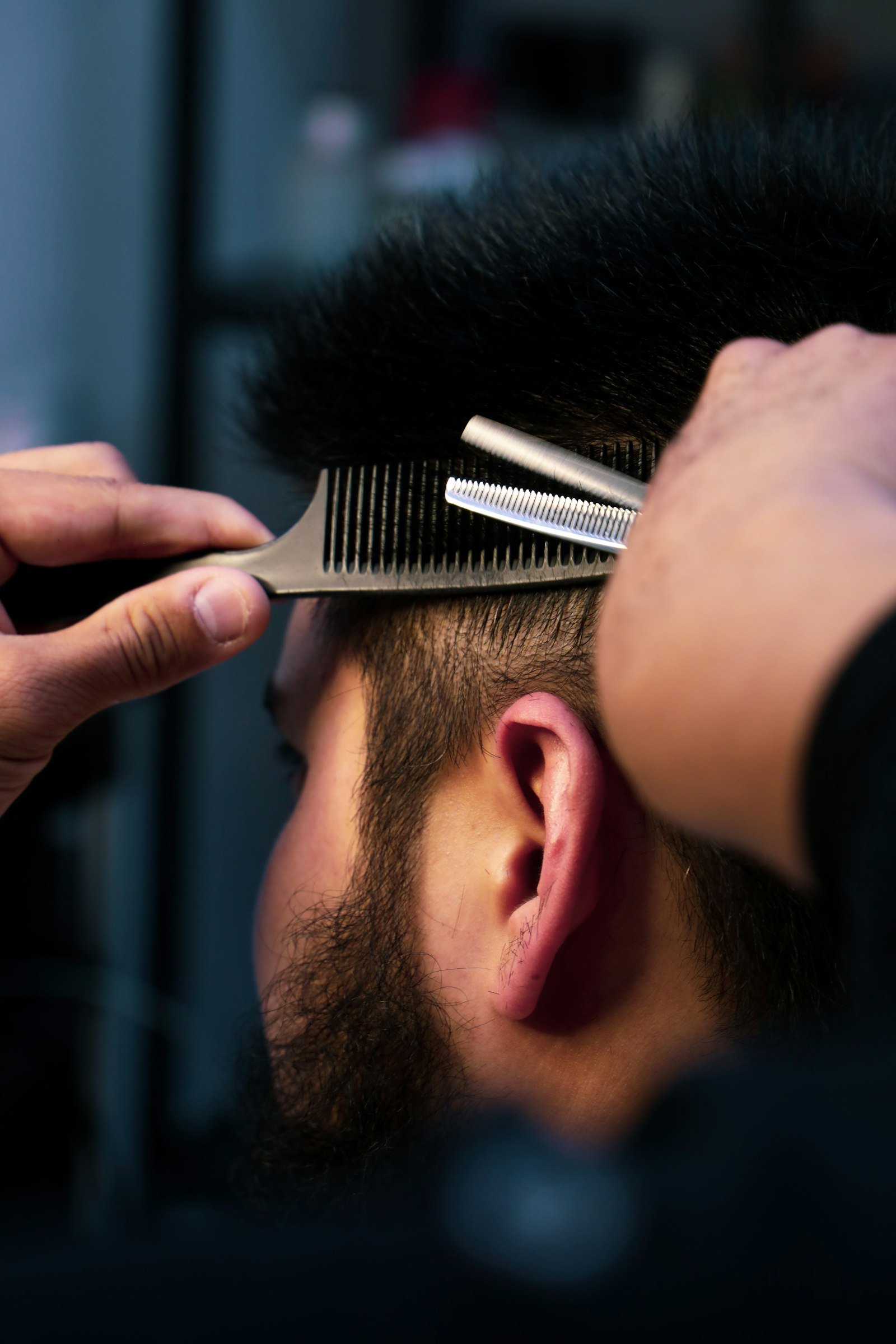
Photo by Gulom Nazarov on Unsplash